📊 Strategic Navigation
- The Confirmation: Kevin Worsh’s New Role
- Geopolitics: Trump, Xi, and the Iran Conflict
- Macro Shock: The 3.8% Inflation Problem
- The Clarity Act: Thursday’s Historic Markup
- Business Cycle: Russell 2000 vs. Bitcoin
- Technical Analysis: The 200-Day EMA Wall
- Saylor’s Strategy: $116M and Accumulation
- Conclusion: The Volatility Coil
1. The Confirmation: Kevin Worsh’s New Role
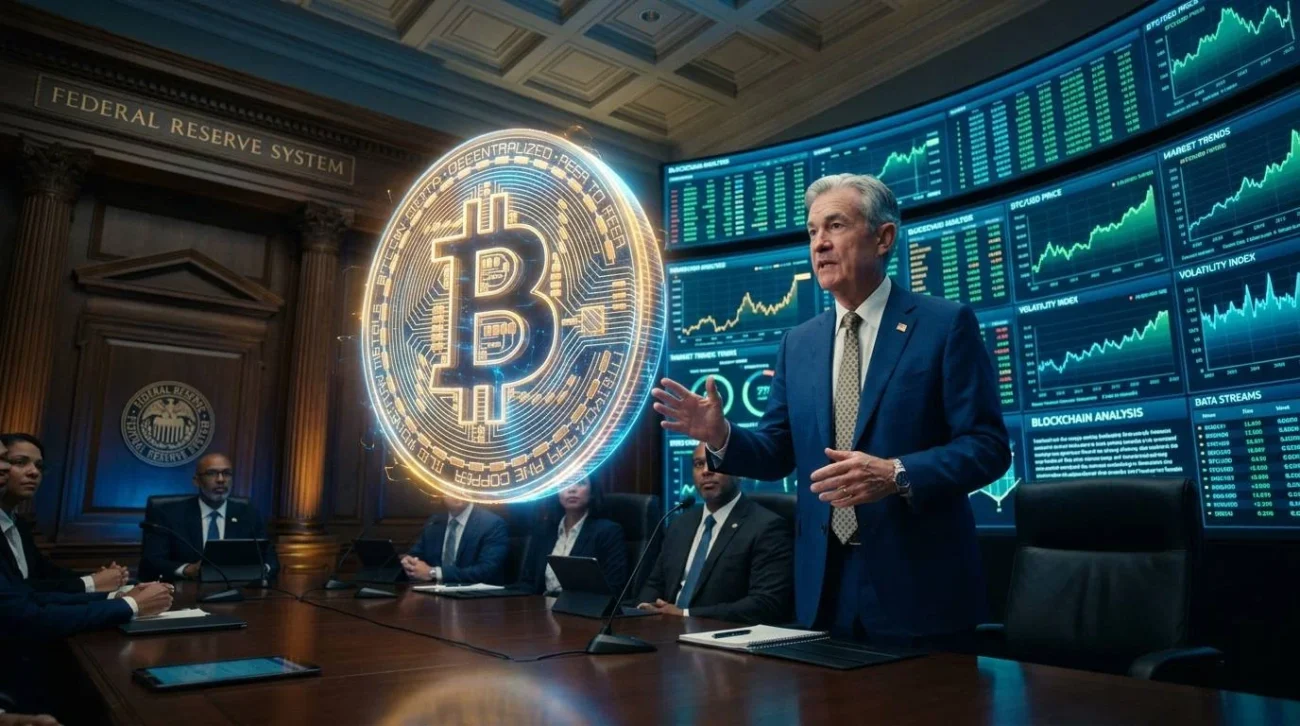
By early 2026, the global financial landscape has entered a period of extreme transition. The U.S. Senate has officially confirmed Kevin Worsh as a Federal Reserve Governor. While many investors are waiting for him to take the mantle of Fed Chair, this confirmation is a necessary bureaucratic step that effectively signals the end of the Jerome Powell era.
Worsh is not your typical central banker. He views Bitcoin not as a threat, but as “the newest, coolest software” that provides market discipline. In his view, Bitcoin acts as a “policeman for policy,” informing decision-makers when they are steering the economy correctly or making a wrong turn.
💡 Important Note
Kevin Worsh is the first “Pro-Bitcoin” Fed official in history. His presence suggests that the U.S. will prioritize building digital infrastructure domestically rather than pushing it overseas.
2. Geopolitics: Trump, Xi, and the Iran Conflict
In a move that has captured the world’s attention, President Trump has traveled to China for a high-stakes summit with President Xi Jinping. This meeting occurs against the backdrop of the escalating Iran war and global trade tensions. Accompanying the President are tech titans like Elon Musk and Tim Cook, underscoring the meeting’s importance for American business.
Diplomacy and Energy
Trump has characterized Xi as a “friend” who has been relatively cooperative regarding recent blockades. China’s reliance on oil from the Middle East makes the Iran conflict a shared concern. Trump predicts that “good things are going to happen” as both leaders seek positive news for their respective economies. For crypto investors, any de-escalation in the Middle East could lower energy costs and help cool down the inflation that is currently stifling rate cut hopes.
3. Macro Shock: The 3.8% Inflation Problem
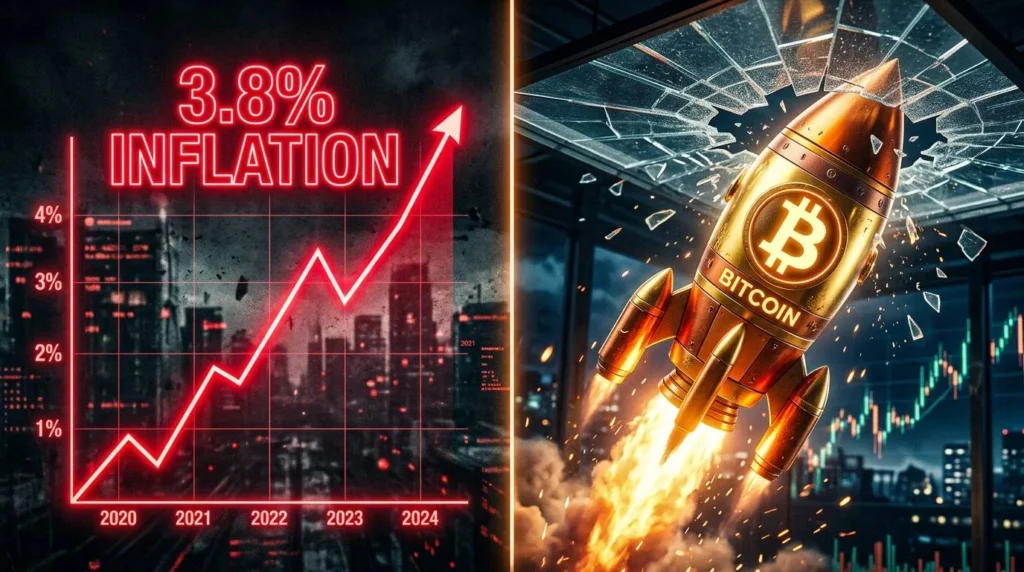
While political headlines provide hope, the economic data is providing a cold shower. U.S. headline inflation recently jumped to 3.8%, exceeding the 3.7% estimate and surging well above the previous 3.3%.
The Rate Cut Formula
Professional traders focus on the relationship between inflation and the Fed’s “Target 2%.” When inflation rises, the likelihood of rate cuts vanishes.
Where:
- $P_{cut}$ = Probability of a Rate Cut
- $T$ = Fed Target Inflation (2%)
- $\pi$ = Actual Inflation (Currently 3.8%)
- $V$ = Political Volatility
Currently, prediction markets have priced in a mere 3% chance of a rate cut by the end of 2026. Conversely, there is a 54% chance of a rate *hike* by June of next year. For Bitcoin, which thrives on liquidity and lower interest rates, this inflationary environment represents the primary “bear case” for the year.
Complete Your 2026 Portfolio Analysis
- 🔗 The Crypto Yield War: Why the Banking Cartel is Panicking Over This Thursday’s Massive Senate Crypto Vote
- 🔗 $20 Trillion Ready to Explode: Why the Crypto Clarity Act is the Most Important Vote in History (Before July 4th)
- 🔗 The $20 Trillion War: Why Polymarket Odds Crashed 17% Before the CLARITY Act Senate Vote
- 🔗 Larry Fink’s Secret Portfolio: Why The Most Powerful Man In Finance Is Buying These Crypto Coins (The Next SpaceX Opportunity)
4. The Clarity Act: Thursday’s Historic Markup
The Senate Banking Committee has finally published the draft for the Clarity Act. The markup is scheduled for Thursday at 10:30 a.m. This legislation is widely considered the most significant step toward comprehensive crypto regulation in U.S. history.
- Institutional Onramp: Clear rules allow banks to custody and trade digital assets without fear of regulatory reprisal.
- Domestic Productivity: By building these technologies in the U.S., Worsh believes we can attract the world’s most talented engineers from Europe and China.
5. Business Cycle: Russell 2000 vs. Bitcoin
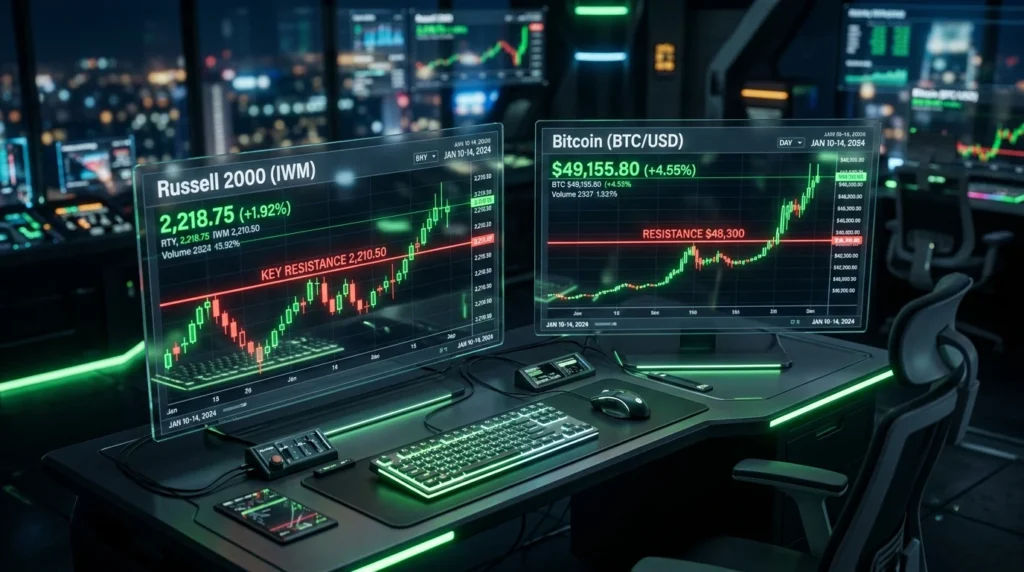
Despite the inflation data, a significant “bull case” is emerging from the business cycle. The ISM PMI has been expanding for four consecutive months. Historically, when the business cycle expands and small-cap stocks (the Russell 2000) break out, Bitcoin has followed with a massive bull run.
| Indicator | Current Status | Impact on Bitcoin |
|---|---|---|
| Russell 2000 | Breaking Out | Bullish (Risk appetite increasing) |
| ISM PMI | Above 50 (Expanding) | Bullish (Economy expanding) |
| Realized Volatility | 1.73% (Yearly Low) | Large Move Incoming |
6. Technical Analysis: The 200-Day EMA Wall
Technically, Bitcoin is at a pivotal resistance point around $83,500. In every previous 4-year cycle, Bitcoin has retested and rejected at the 200-day moving average at this exact point, leading to an average crash of 68%.
- The Bear Case: Geopolitical uncertainty and high inflation lead to a rejection and a “sweep of the lows” before the true cycle low in 5 months.
- The Bull Case: If Bitcoin can flip $83,500 into support, the “coil up” will lead to a parabolic higher all-time high by year-end.
“Gold topping usually means Bitcoin bottoming. Historically, gold pumps, and Bitcoin follows. With gold hitting fresh highs, the crypto bottom may already be in.”
7. Saylor’s Strategy: $116M and Accumulation
While technical analysts debate the charts, Michael Saylor continues his relentless accumulation. He recently purchased another $116 million worth of Bitcoin. Saylor’s strategy relies on “equity premiums” and his ability to issue credit against his existing Bitcoin collateral.
At $125,000 per Bitcoin, MicroStrategy’s collateral will reach hundreds of billions, further increasing its capacity to buy. To Saylor, the short-term volatility is irrelevant; he is building a Bitcoin-backed credit machine that thrives as the “Bitcoin NAV” expands.
❓ People Also Ask
Which crypto will explode 1000x?
Finding 1000x gains requires looking at sub-sectors of the business cycle. As the Clarity Act provides rules, look for assets that provide “cool software” utility, similar to Worsh’s description of Bitcoin. However, the top 3 (BTC, ETH, SOL) remain the safest bets for institutional growth.
What does Warren Buffett say about crypto?
Buffett has famously avoided Bitcoin, citing its lack of productive output. However, Kevin Worsh counters this by viewing Bitcoin as a necessary tool for “market discipline” that forces central bankers to be more productive and honest.
What is the 1% rule in crypto?
The 1% rule suggests that an investor should never risk more than 1% of their total portfolio on a single trade. In the current high-volatility environment, this rule helps traders survive the retests of the 200-day EMA.
8. Conclusion: The Volatility Coil
The 2026 supercycle is currently a “coil up” of conflicting forces. On one hand, we have pro-crypto Fed governors and a historic Clarity Act. On the other, we have sticky 3.8% inflation and technical resistance that has historically led to massive crashes.
🛡️ Stay Informed with Altcoin Daily
From Worsh’s policy shifts to Saylor’s credit engine, we track the rotation of risk. Join our community for daily updates on the business cycle and technical pivots.
